1 Jul 2026
Community Dynamics in Virtual Tournament Arenas and Their Reach Into Casual Play Sessions
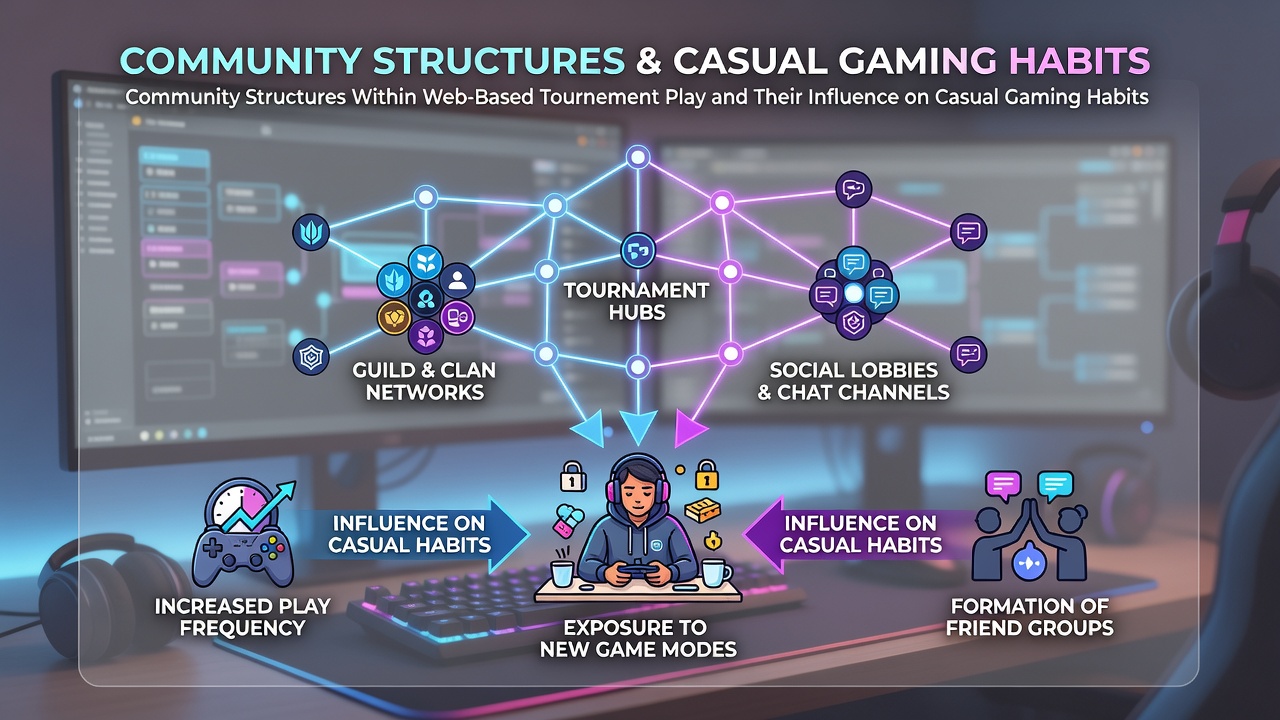
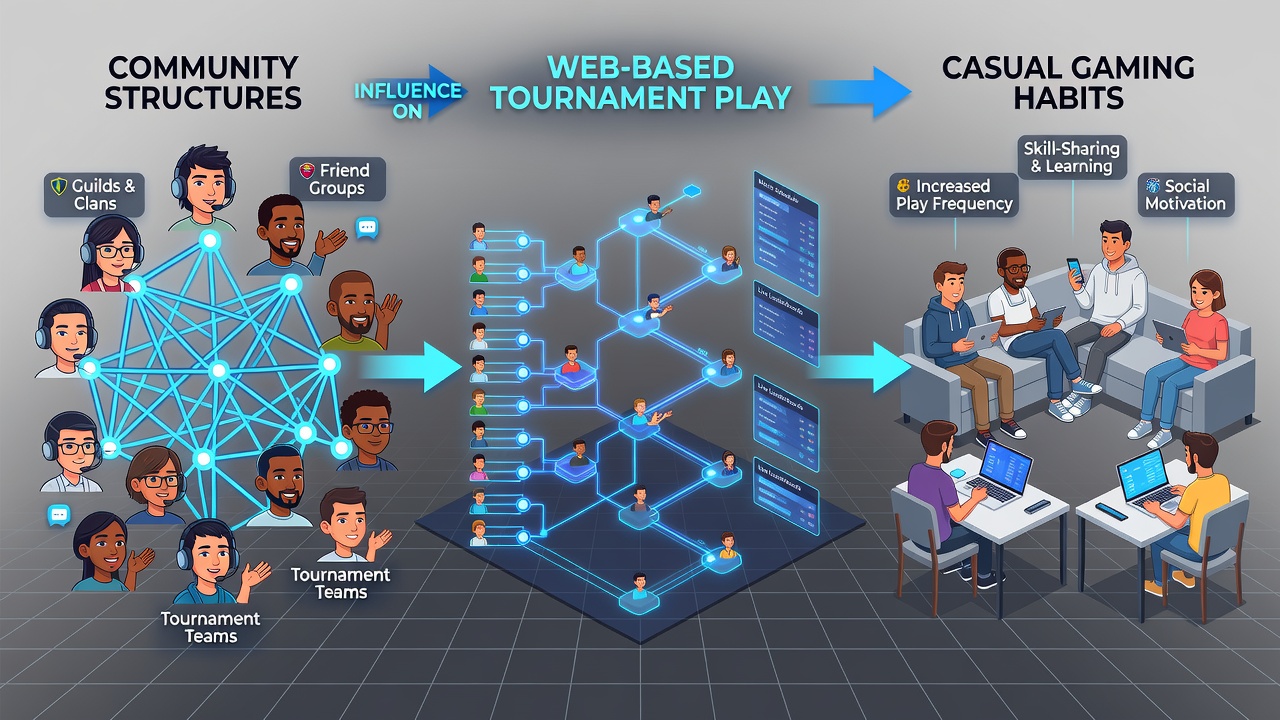
Web-based tournament play has developed distinct community structures that extend beyond the matches themselves, and these groups shape how participants approach casual gaming sessions in measurable ways. Observers note that organized player networks often form around shared goals like ranking climbs or event coordination, and the resulting connections carry over into daily play routines where individuals select games or modes based on group preferences.
Research indicates that tournament communities typically organize through layered systems including in-game clans, external forums, voice channels, and ranking platforms. These layers allow for different levels of involvement, from core organizers who manage schedules to peripheral members who join occasional events. Data from industry reports shows that participants in such structures log higher session frequencies even outside tournaments, because the social ties create recurring reasons to log in and check updates or practice with others.
Formation Patterns Among Player Groups
Groups emerge around specific game titles that host regular competitions, and leaders often establish rules for entry, conduct, and advancement. Those who've studied these patterns find that recruitment happens via public leaderboards or invitation chains, while retention depends on consistent event scheduling and shared resources like strategy guides. In many cases, the hierarchy includes roles such as captains, analysts, and scouts, and this division of labor mirrors professional team setups on a smaller scale.
Evidence suggests that geographic and time-zone considerations play a role in group stability, since members coordinate across regions using shared calendars. Figures released in July 2026 by the Entertainment Software Association highlight that tournament-linked communities grew in membership by double-digit percentages year over year, coinciding with expanded access to cross-platform tools that simplify coordination.
Transfer Effects on Everyday Gaming Choices
Casual habits shift when players carry expectations from tournament environments into non-competitive modes. Researchers discovered that individuals affiliated with structured groups tend to favor games offering progression systems or social features that echo team-based rewards. This preference appears because repeated exposure to ranked play reinforces habits like tracking personal statistics or seeking feedback from peers.
One study revealed that casual session lengths increased among tournament participants compared to unaffiliated players, particularly when groups encouraged daily warm-up matches or review discussions. The reality is that these influences operate through subtle mechanisms such as shared playlists or recommended titles circulated within chats, rather than direct mandates.
Communication Channels and Habit Reinforcement
External platforms serve as the backbone for ongoing interaction, and members exchange tips, schedule casual matches, or discuss meta changes even when no formal event is active. According to data compiled by the Interactive Games and Entertainment Association in Australia, these channels correlate with broader game exploration, since recommendations often introduce participants to titles outside their original tournament focus.
Observers note that voice and text exchanges during casual play adopt elements from tournament coordination, such as callouts or role assignments, which can elevate the intensity of otherwise relaxed sessions. Yet the same structures also provide support networks that help newer players build confidence, leading to sustained engagement across both competitive and informal contexts.
Measurement of Influence Through Participation Data
Longitudinal tracking shows measurable differences in play patterns tied to community involvement. Participants report selecting multiplayer options more frequently when group norms emphasize collective improvement, while solo modes receive less attention unless they serve as training grounds. Academic analyses from European research institutions confirm that these shifts occur gradually, often within the first few months of active group membership.
What's significant is that retention rates remain higher for players embedded in tournament communities, because the social accountability and event calendar create external motivation that casual solo play lacks. This pattern holds across age groups and regions where data collection has occurred.
Conclusion
Community structures in web-based tournament play establish frameworks that extend into casual gaming through repeated social contact, shared resources, and reinforced expectations. The connections formed during organized events influence game selection, session duration, and interaction styles in everyday contexts, as documented in multiple industry and academic sources. These dynamics continue to evolve alongside platform improvements that facilitate group formation and communication.