6 Jul 2026
Connectivity Milestones That Shaped Casual Web Games into Thriving Tournament Ecosystems
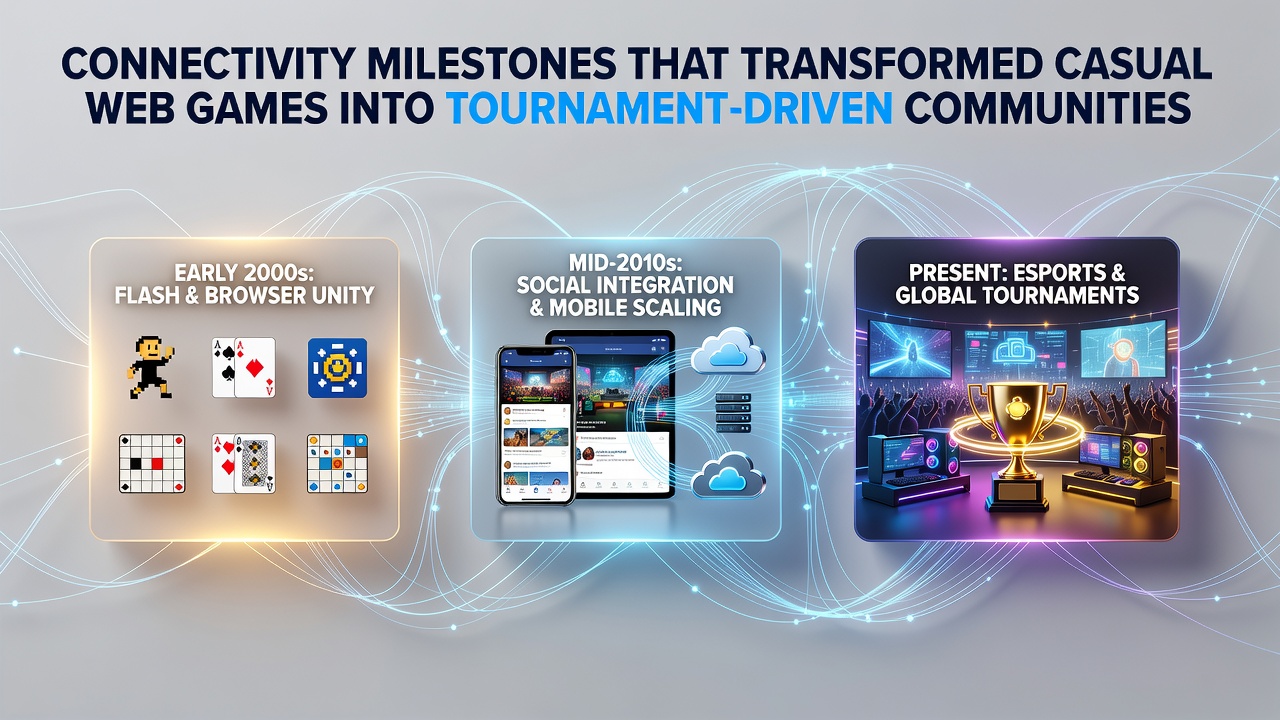
Early web games operated under severe technical constraints where dial-up modems created latency issues that restricted real-time interactions to simple turn-based formats, yet the introduction of broadband connections in the late 1990s began to shift these dynamics as data transfer rates climbed from kilobits to megabits per second according to reports from the International Telecommunication Union. Observers note that this upgrade allowed developers to implement synchronized gameplay across multiple users without the frequent disconnects that plagued earlier systems, and it set the stage for more structured competitive formats.
From Local Servers to Global Networks
Broadband expansion accelerated in the early 2000s when cable and DSL services became widely available in urban areas, which enabled persistent game worlds where players could join sessions lasting hours rather than minutes, while researchers at various academic institutions documented corresponding rises in user engagement metrics during this period. The transition supported features such as leaderboards and basic matchmaking, because lower ping times reduced the advantage gaps between participants on different connection types, and data from industry analyses showed that game sessions extended as stability improved. Yet challenges remained with regional infrastructure variations that created uneven playing fields until fiber optic deployments started to standardize access speeds across broader populations.
Wireless and Mobile Shifts
Mobile connectivity milestones arrived with 3G networks around 2003 and gained momentum through 4G LTE introductions in the 2010s, which brought portable devices into the mix for web-based titles that previously required desktop browsers, and studies from European research bodies indicated that these networks supported data rates sufficient for real-time elements like timed challenges and live scoring. Players gained the ability to participate from varied locations, whereas earlier fixed-line limitations confined activity to home setups, and this mobility factor contributed to larger participant pools in emerging tournament structures. By 2026, 5G rollouts had further reduced latency to levels under 10 milliseconds in many metropolitan zones, allowing seamless integration of mobile users into centralized competition brackets without noticeable input delays.
Protocol Advances and Real-Time Capabilities
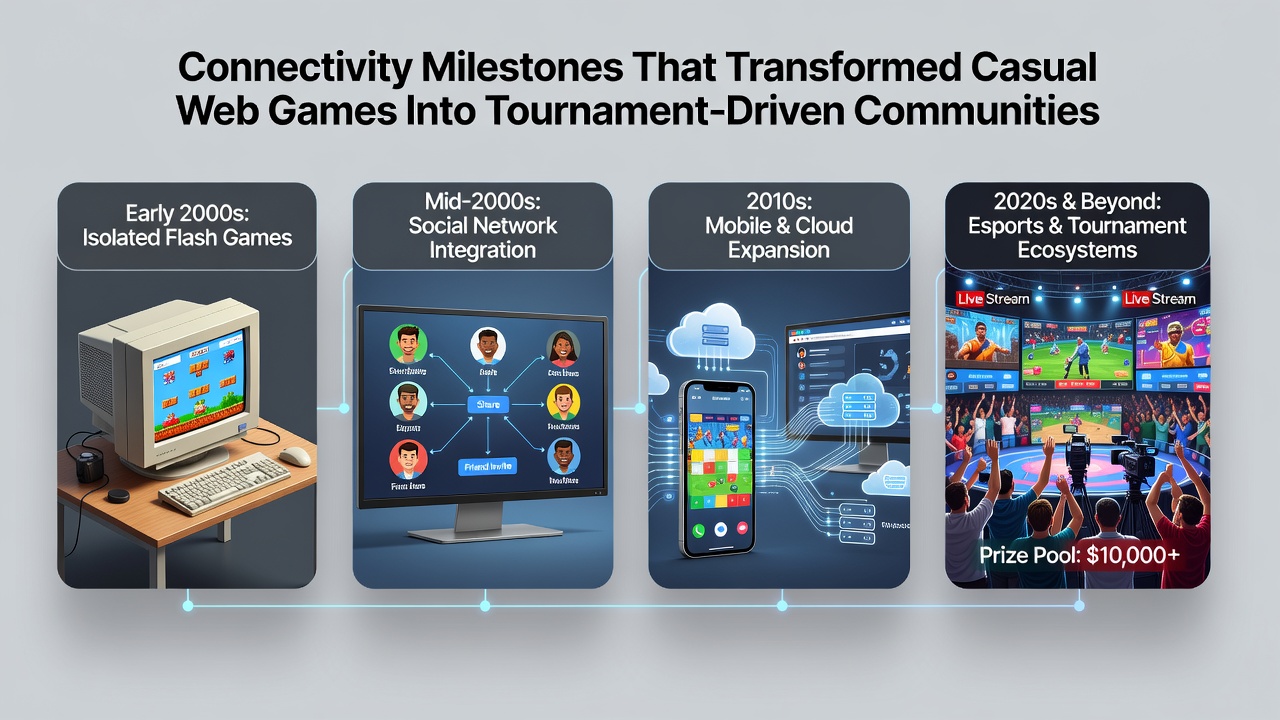
Technical standards such as WebSockets, standardized by the Internet Engineering Task Force in 2011, replaced older polling methods that consumed excessive bandwidth, and this change permitted continuous data streams between browsers and servers that facilitated instant updates during matches. Developers incorporated these tools into platforms where casual puzzle or action games evolved into formats with ranked divisions and elimination rounds, because reliable two-way communication eliminated the need for page refreshes that disrupted flow. Research indicates that adoption rates for such protocols correlated with increased retention in competitive modes, while geographic data from Canadian regulatory filings on digital infrastructure highlighted how improved backbone networks supported simultaneous connections from thousands of users across continents.
Cloud-based services emerged as another pivotal element when providers began offering dedicated game servers in the mid-2010s, which distributed processing loads and minimized regional bottlenecks that once caused desync issues during peak hours. Those who tracked participation numbers observed expansions in cross-border events as upload speeds climbed through widespread fiber availability, and this infrastructure supported features including spectator modes and automated bracket generation that turned isolated play sessions into organized series with prize pools. Figures from Australian communications reports reveal steady growth in average household connection quality through the 2020s, enabling consistent performance even in titles requiring precise timing across large groups.
Community Structures and Data-Driven Events
Tournament ecosystems expanded as analytics platforms integrated with game servers to track metrics like accuracy rates and completion times, which allowed organizers to seed matches fairly based on historical performance rather than random assignment. Connectivity improvements meant that events could run without interruptions from packet loss, and this reliability encouraged sponsorships from hardware firms seeking to demonstrate low-latency capabilities. In July 2026, several platforms reported record entries in seasonal competitions that spanned multiple time zones, because synchronized clocks and stable routing protocols ensured equitable conditions regardless of participant location.
Observers have documented how these milestones collectively reduced barriers that separated casual users from competitive circuits, whereas isolated browser experiences once dominated the space. Integration with social features further amplified reach when high-bandwidth connections supported voice chat overlays without degrading gameplay streams, and academic papers on network effects in digital entertainment detail corresponding increases in organized leagues that mirror traditional sports formats.
Conclusion
Connectivity developments from broadband foundations through 5G advancements and protocol innovations have progressively enabled the scale and responsiveness required for tournament frameworks in web games, with ongoing infrastructure investments projected to sustain further expansions in participant diversity and event complexity. Data from multiple regulatory and research sources continues to track these correlations between network performance and community growth patterns across different regions.