1 Jun 2026
Cross-Border Pixel Pacts: How Download-Free Tournament Hubs Quietly Linked Distant Player Groups
Download-free tournament hubs emerged from the early days of browser gaming and evolved into systems that connect players from different countries without requiring installations or accounts on centralized platforms. These portals host HTML5 and legacy-compatible games where users join matches through simple links, and tournament structures organize competitive play across time zones. Observers note that such setups rely on server-side matchmaking rather than peer-to-peer connections, which allows participants in regions with varying internet infrastructure to compete in real time.
Development of browser-based multiplayer systems
Browser games transitioned from single-player experiences in the 2000s to multiplayer formats once Flash and later HTML5 enabled persistent lobbies. Developers built tournament features that tracked scores on shared leaderboards, and portal operators added chat functions that facilitated coordination between strangers. Research from industry reports shows participation in these casual multiplayer events grew steadily as mobile devices gained browser capabilities, expanding access beyond desktop users. Data indicates that by the mid-2010s many portals hosted events drawing entrants from multiple continents simultaneously.
Mechanisms that support cross-border participation
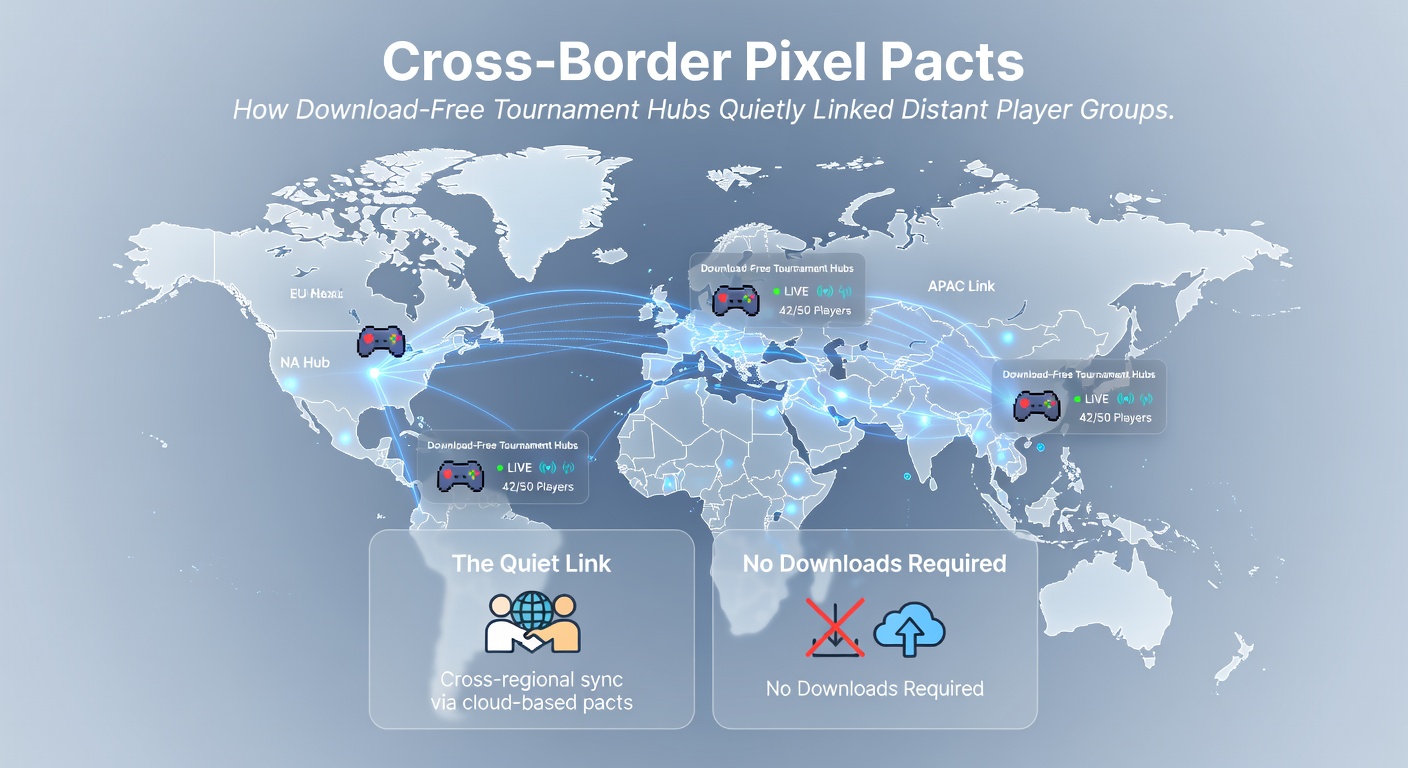
Matchmaking algorithms prioritize latency balancing over geographic proximity, which pairs players from distant locations when regional pools prove insufficient. Tournament formats often use asynchronous brackets so participants in Asia, Europe, and the Americas can advance without overlapping schedules. Portal operators maintain regional servers that synchronize progress, and language translation tools appear in some interfaces to reduce communication barriers during team-based modes. According to figures from the Entertainment Software Association, browser gaming accounts for a measurable share of global online play, particularly in areas where download restrictions or device limitations persist.
Network effects observed in player communities
Repeated participation in the same tournament series creates informal connections among recurring usernames, even when players never exchange direct contact information. Studies of web game ecosystems reveal clusters of activity where users from one country frequently encounter opponents from another through shared event calendars. These patterns emerged without deliberate international marketing, driven instead by the open nature of browser access and the absence of regional download gates. One analysis of participation logs found consistent pairings between North American and European accounts in evening slots adjusted for time differences.
Role of specific game genres and formats
Real-time strategy and puzzle games adapted well to browser constraints, offering short match durations that accommodate irregular schedules across borders. Platformers and racing titles incorporated global leaderboards that reset weekly, encouraging weekly returns from international audiences. Multiplayer lobbies in these titles often display flags or region indicators, yet the core gameplay remains identical regardless of player origin. Reports compiled by academic researchers at institutions tracking digital media usage document how these design choices sustain engagement without requiring players to navigate separate regional sites.
Trends noted around June 2026
As of June 2026, several long-running portals continue to report stable international turnout for weekly tournaments, with participation metrics showing balanced representation from multiple language groups. Updates to HTML5 standards have improved compatibility on newer browsers, and some operators integrated basic analytics to display aggregate player origins without exposing individual data. Industry observers track these developments through public leaderboards rather than private surveys, noting that download-free access remains a primary entry point for users in regions with limited app store availability.
Conclusion
Download-free tournament hubs function as distributed networks that link player groups through accessible interfaces and structured competition. Their growth stems from technical adaptations in browser technology combined with organizational features like matchmaking and leaderboards. Available data from multiple sources confirms ongoing cross-border activity without centralized coordination, illustrating how open web platforms sustain international casual play over extended periods.