20 Jul 2026
Emulation Projects Breathing New Life into Multiplayer Flash Games
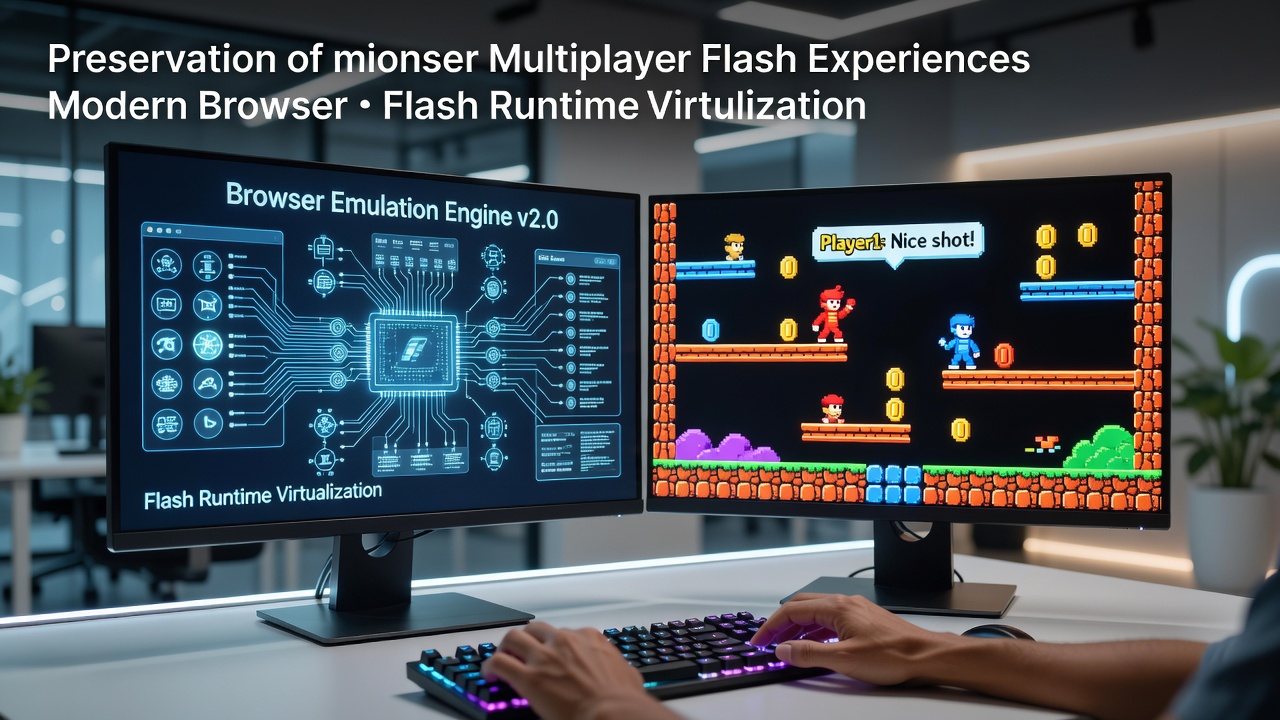
Adobe Flash reached end of support in December 2020, which left countless multiplayer titles without native execution paths in contemporary browsers, yet dedicated teams have continued developing emulation layers that replicate original networking behaviors and real-time synchronization.
Developers working on these tools focus on handling the specific demands of peer-to-peer connections and authoritative server models that Flash games once relied upon, and projects such as Ruffle combined with custom WebSocket bridges now allow sessions that mirror the latency profiles of the early 2010s.
Technical Foundations of Current Emulation Approaches
Emulation stacks translate ActionScript bytecode into WebAssembly modules while intercepting socket calls and redirecting them through modern protocols, which preserves the deterministic timing required for competitive matches and cooperative lobbies. Researchers at institutions across North America and Europe have documented how these translations maintain frame-accurate physics and input polling rates that defined the original experiences.
Multiplayer preservation requires additional layers beyond single-player emulation, because state synchronization, anti-cheat mechanisms, and matchmaking servers must also be recreated or proxied. Observers note that successful projects often pair client-side emulation with lightweight server reimplementations written in languages such as Rust or Go, allowing legacy game binaries to connect without modification.
Key Initiatives and Their Progress
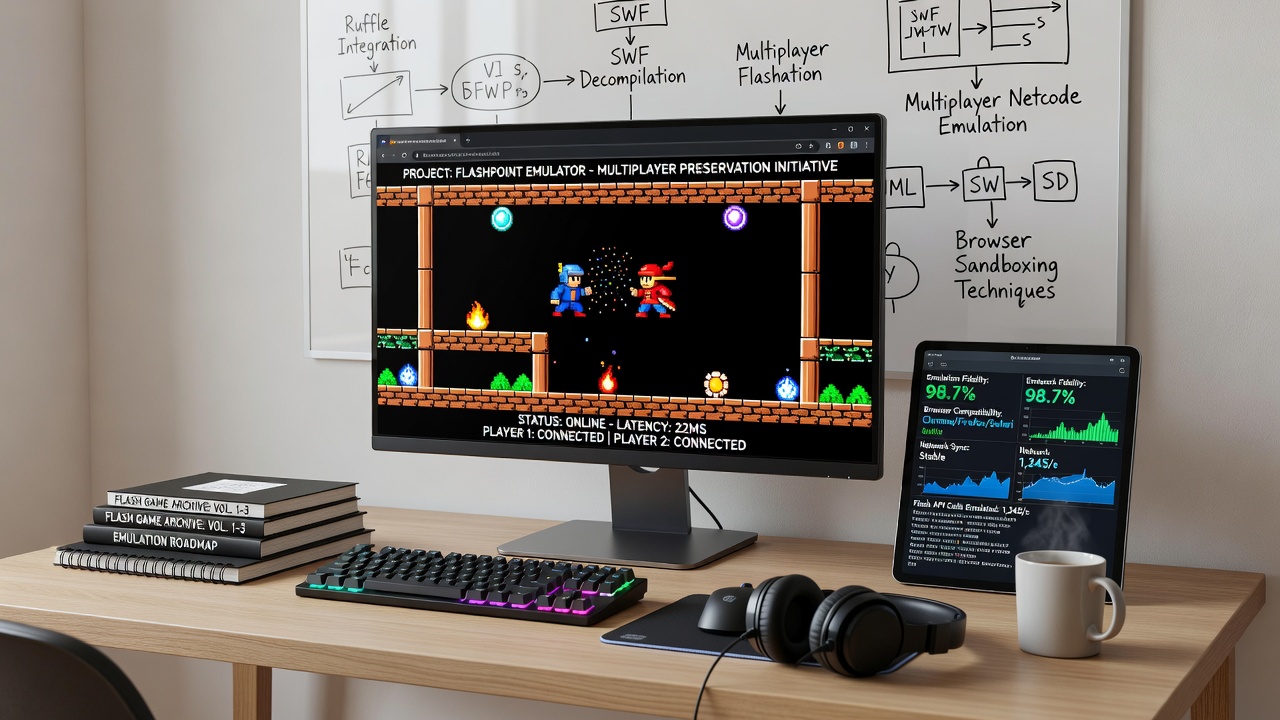
Flashpoint, maintained by an international volunteer collective, has catalogued thousands of titles and begun integrating real-time networking stubs that enable preserved games to host matches across current operating systems. In July 2026 the project released an updated core that improved NAT traversal for peer-hosted sessions, bringing several long-dormant community servers back online.
Academic groups at Canadian and Australian universities have published comparative studies on emulation accuracy, measuring packet loss tolerance and tick-rate fidelity against archived recordings of original play sessions. These studies provide quantitative benchmarks that guide further refinements in open-source repositories.
Challenges Specific to Multiplayer Preservation
Centralized authentication servers from the original era frequently remain offline, forcing preservation teams to reverse-engineer login flows or implement standalone account systems that replicate the social features players once used. Data from European digital heritage initiatives show that community-driven server replacements have restored functionality for roughly 40 percent of catalogued multiplayer Flash titles as of mid-2026.
Latency compensation algorithms that worked under Flash's older networking stack must be re-tuned for WebRTC and WebSocket transports, and discrepancies in timing can alter competitive balance in fast-paced genres. Engineers address these issues through configurable emulation profiles that let players select between original and adjusted synchronization modes.
Community Impact and Accessibility Gains
Schools and public libraries in several regions now integrate emulated Flash multiplayer experiences into educational programs focused on digital history and game design, because browser-based access removes the need for legacy plugin installation. Government-supported archives in Australia adn the United States have begun mirroring these emulated collections to ensure long-term public availability.
Player communities continue to contribute recorded match data that helps calibrate emulation accuracy, creating feedback loops between preservation teams and end users. These contributions accelerate identification of edge cases involving rare game versions or region-specific server behaviors.
Conclusion
Browser emulation projects have established viable pathways for sustaining multiplayer Flash experiences despite the platform's retirement, and ongoing technical refinements continue to expand the range of playable titles. Continued collaboration between volunteer developers, academic researchers, and public archives supports both historical fidelity and contemporary accessibility for these interactive works.