8 Jul 2026
Patterns of Interaction Emerging from Rapid Rounds on Popular Browser Platforms
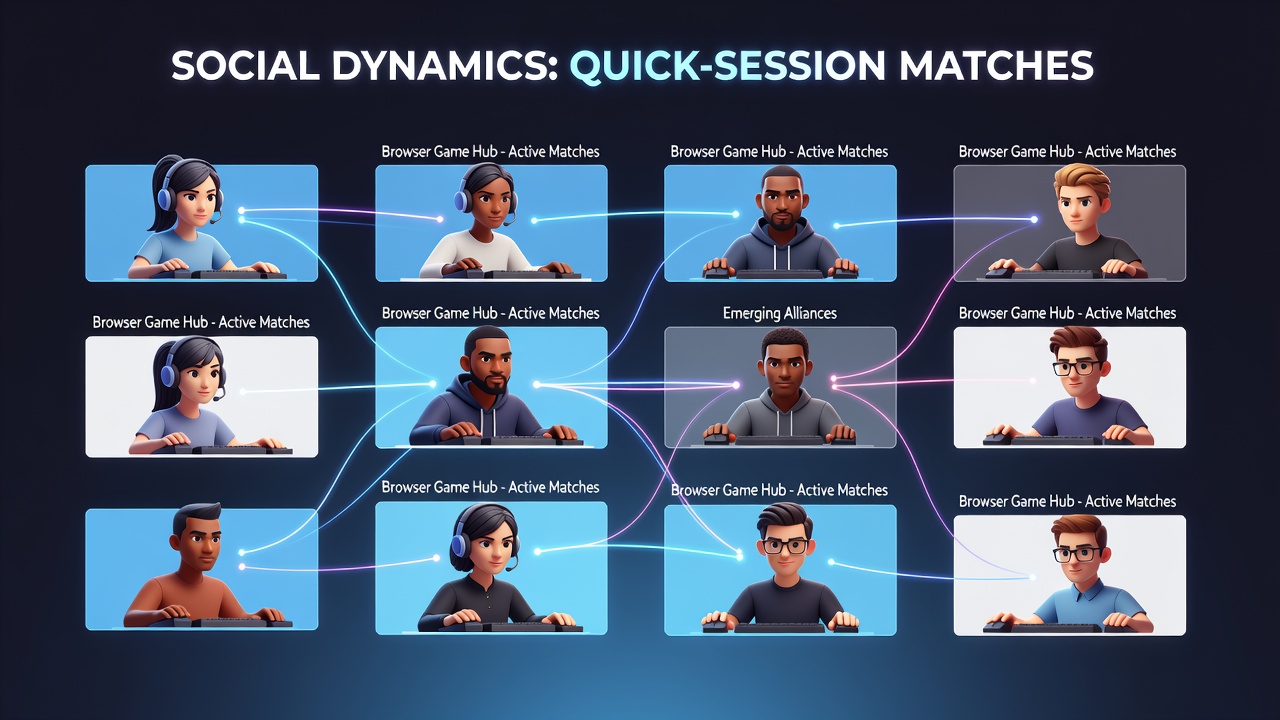
Quick-session matches on browser game sites create distinct social patterns where participants enter and exit interactions within minutes, yet these brief encounters generate measurable community effects. Sites hosting such games track millions of sessions daily, and analysts note that users often form temporary alliances or rivalries without prior connections. Research from the Entertainment Software Association indicates that browser-based platforms accounted for a significant share of casual multiplayer activity through mid-2026, with data collected in July showing sustained engagement in short-form formats.
Core Elements Driving Social Exchange
These matches typically last between two and ten minutes, incorporating features like in-game text chat, real-time score displays, and automatic matchmaking that pairs strangers based on availability rather than history. Observers note that the compressed timeframe encourages concise communication, where players exchange quick tips or taunts before the session ends. Studies conducted by academic teams at European universities reveal that such brevity reduces barriers to entry, allowing newcomers to participate without committing to extended campaigns, while figures from industry reports show repeat participation rates climbing when social feedback loops appear within the first few rounds.
Leaderboards update instantly after each match, and this visibility prompts users to recognize recurring usernames across sessions. Those who've studied these platforms find that individuals sometimes reference previous encounters in subsequent games, creating threads of continuity despite the lack of persistent groups. Data collected through platform analytics demonstrates that chat volume spikes during competitive moments, with messages clustering around strategy suggestions or acknowledgments of skillful plays.
Observed Behavioral Shifts in July 2026
During July 2026, platform operators reported increased cross-regional pairings as server infrastructure expanded, leading to more diverse participant pools in individual matches. Researchers tracking these trends documented a rise in multilingual greetings and emoji-based exchanges that transcend language differences. One analysis from a Canadian research institute highlighted how quick resets between matches enable rapid reputation building, where consistent fair play earns informal respect signaled through follow requests or friend invites on linked accounts.
Yet the same short duration limits deep relationship formation, resulting in networks characterized by high turnover. Evidence from multiple studies suggests users maintain dozens of such weak ties rather than a few strong ones, and this structure supports broader information flow about game mechanics or upcoming events. Industry organizations have tracked how these dynamics influence retention, noting that players who receive positive social signals in early sessions tend to log additional rounds within the same day.
Mechanisms of Alliance and Competition
Cooperative modes within quick matches foster momentary teamwork, where participants coordinate actions through limited chat windows before dispersing. Analysts observe that successful collaborations often prompt users to queue again together, though success rates drop when coordination fails due to mismatched skill levels. Competitive formats, by contrast, generate rivalries that carry over when the same opponents reappear in later sessions, with some platforms recording these encounters automatically for users to review.

Those monitoring community forums find threads dedicated to identifying skilled opponents from recent matches, turning transient competition into ongoing narratives. According to data released by an Australian regulatory body overseeing digital entertainment, such patterns contribute to stable daily active user counts even as individual session lengths remain brief. The structure encourages skill signaling through usernames or cosmetic items earned in prior rounds, providing conversation starters that accelerate social recognition.
Broader Community Ripple Effects
Quick-session environments feed into larger site ecosystems where aggregated match data informs recommendations and highlights emerging player groups. Reports from academic sources indicate that these micro-interactions scale up to influence overall platform culture, with norms around sportsmanship spreading through repeated exposure rather than formal rules. Participants frequently carry habits developed in browser games to other online spaces, including expectations for rapid feedback and tolerance for varied skill levels.
Platform designers have adjusted matchmaking algorithms in response to observed preferences for balanced pairings, which in turn affect how social bonds form. Figures released in 2026 show that regions with higher browser game adoption exhibit stronger secondary communities on external discussion boards, where users share clips or discuss standout matches from the previous week. This externalization extends the lifespan of otherwise fleeting connections beyond the original session.
Conclusion
Short-duration matches on browser platforms produce layered social dynamics that blend competition with cooperation within constrained timeframes. Data gathered through July 2026 confirms these patterns persist across diverse user bases, supported by instant feedback systems and visible performance metrics. The resulting networks remain fluid yet influential, shaping both immediate gameplay and longer-term community behaviors without requiring sustained commitments from participants.