29 Jul 2026
The Quiet Rise of Regional Browser Game Leagues Connecting Dispersed Players Through Free Multiplayer Events
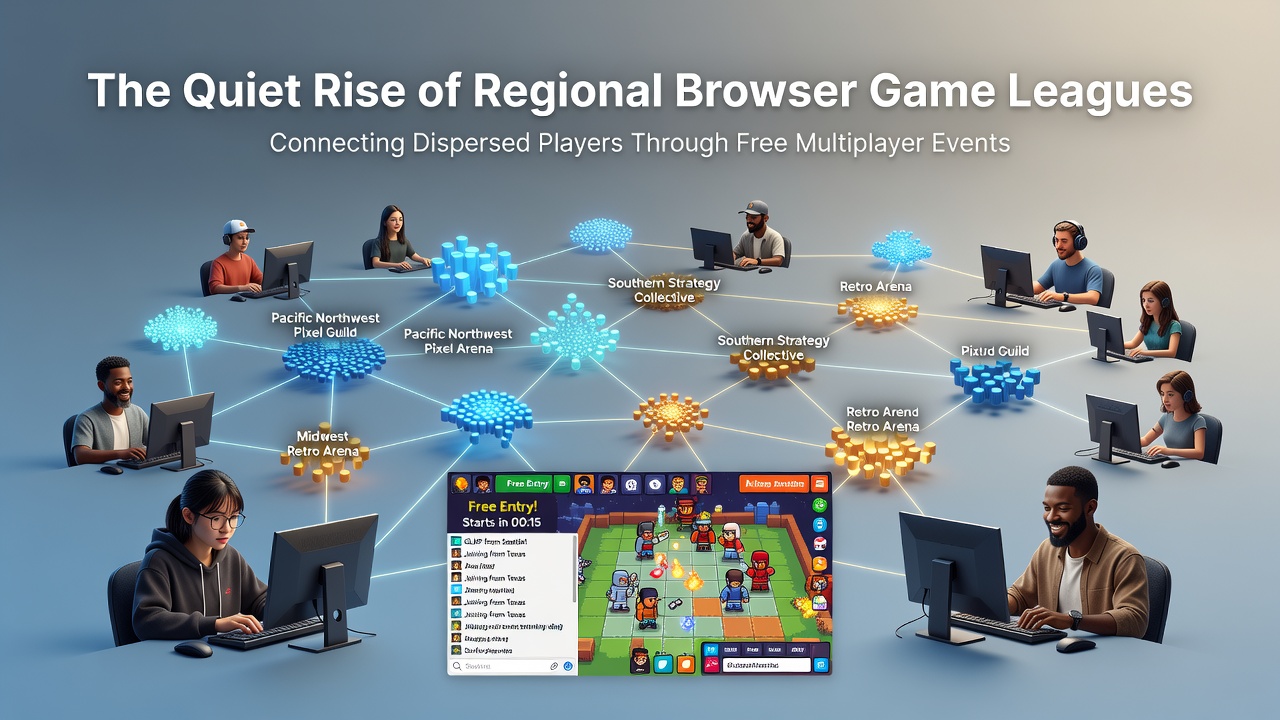
Regional browser game leagues have developed steadily over the past decade as organized groups that host free multiplayer events for participants who live in the same geographic area yet often remain separated by distance or schedules, and these leagues operate primarily through browser platforms that require no downloads or paid subscriptions.
Browser technology allows instant access to games with multiplayer components such as real-time strategy matches, cooperative puzzle sessions, and competitive leaderboards, which means players in rural or suburban locations can join without specialized hardware while still engaging with others nearby.
Expansion of Accessible Gaming Platforms
HTML5 standards and improved web servers have supported the creation of stable multiplayer environments in browser games, and data from industry reports show increased participation in these formats across North America and Europe since the early 2020s. Researchers at various universities have documented how regional organizers use these tools to form leagues that mirror traditional sports structures yet stay entirely digital and cost-free for entrants.
Leagues typically register players through simple web forms, assign them to divisions based on location or skill level, and schedule matches during evenings or weekends when bandwidth remains reliable. This approach has allowed dispersed individuals in provinces like Alberta or states like Montana to compete regularly without travel costs.
Structure of Regional Leagues and Events
Each league maintains a calendar of free events that include weekly scrimmages, monthly tournaments, and seasonal championships, all conducted inside browser windows where participants log in at set times to connect with opponents from the same region. Organizers coordinate through community forums and email lists rather than commercial platforms, which keeps overhead low and participation open to anyone with internet access.
One documented case involved a Midwest league that paired players from Illinois and Indiana for cooperative browser games focused on resource management, resulting in consistent attendance across multiple seasons according to participant logs shared in public archives. Another example from Scandinavia showed similar patterns where Norwegian and Swedish residents formed divisions around browser-based racing simulations that updated leaderboards in real time.
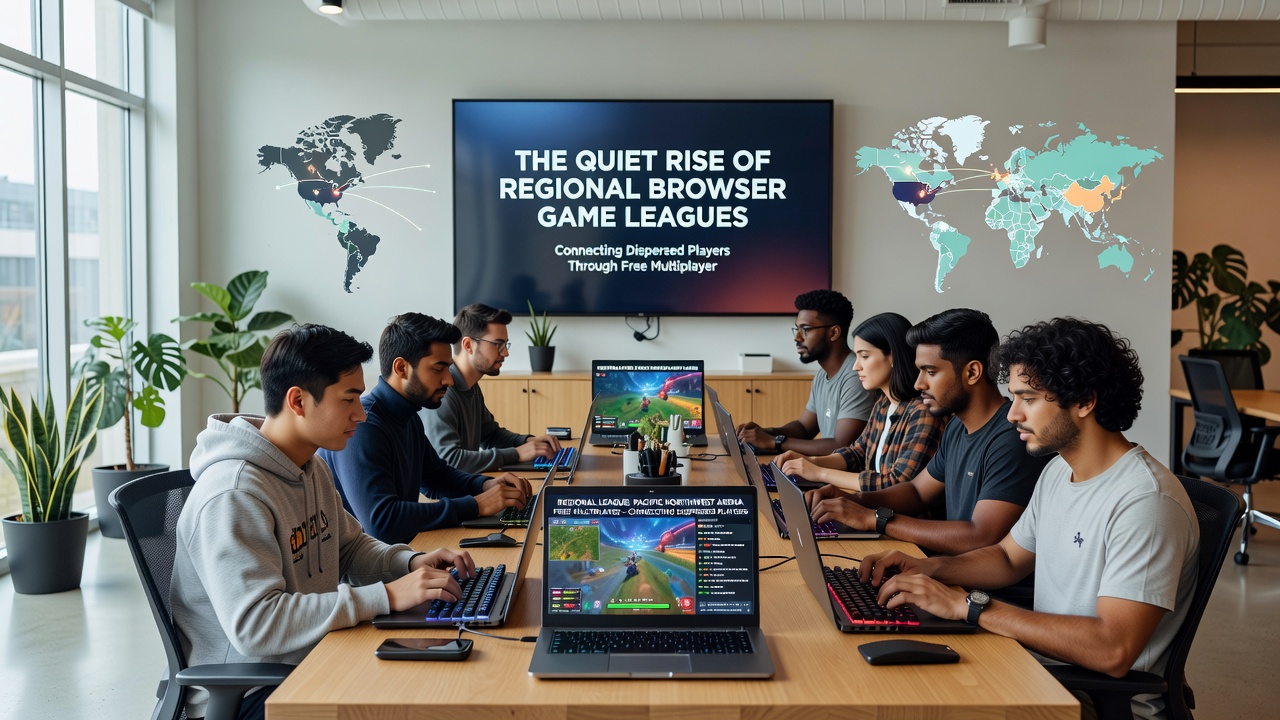
Events often incorporate elements like team chat channels and shared replays that reinforce local identity even when players never meet in person, and these features have helped maintain engagement levels during periods of variable internet quality in remote areas.
Player Connection Mechanisms in July 2026
During July 2026 several regional leagues synchronized their free multiplayer events across time zones to accommodate participants who split time between work and family obligations, creating overlapping sessions that allowed cross-division play while preserving geographic groupings. Figures from gaming association reports indicate that browser-based formats accounted for a measurable share of casual multiplayer activity in that period, particularly in areas with limited access to console networks.
Organizers in Australia and Canada have noted that these events reduce isolation for players in spread-out communities by providing regular interaction points, and academic studies on digital communities have tracked how repeated participation builds familiarity among individuals who share only regional ties.
Data and Participation Trends
Statistics compiled by the Interactive Games and Entertainment Association reveal steady growth in browser game usage for organized play in the Asia-Pacific region, with similar patterns emerging in reports from Canadian digital economy trackers. These numbers reflect increased registrations in regional leagues that emphasize free entry and browser compatibility over monetized features.
Leagues frequently share anonymized match data with research institutions to study social connectivity outcomes, and observers have recorded how such events serve as entry points for individuals who later explore other forms of online collaboration. The absence of fees or hardware barriers distinguishes these groups from commercial esports circuits, allowing broader demographic reach that includes students, shift workers, and retirees.
Conclusion
Regional browser game leagues continue to adapt their free multiplayer formats to connect dispersed players through accessible web technology, and ongoing developments in browser capabilities suggest further expansion of these networks in coming years. Participation data and documented events demonstrate consistent activity without reliance on paid models or proprietary software.